I’ve been reflecting a lot lately on how drastically ecommerce has evolved, particularly around how customers discover products. Traditional SEO has been a cornerstone of online retail for decades, but we’re entering a new era, one powered by artificial intelligence.
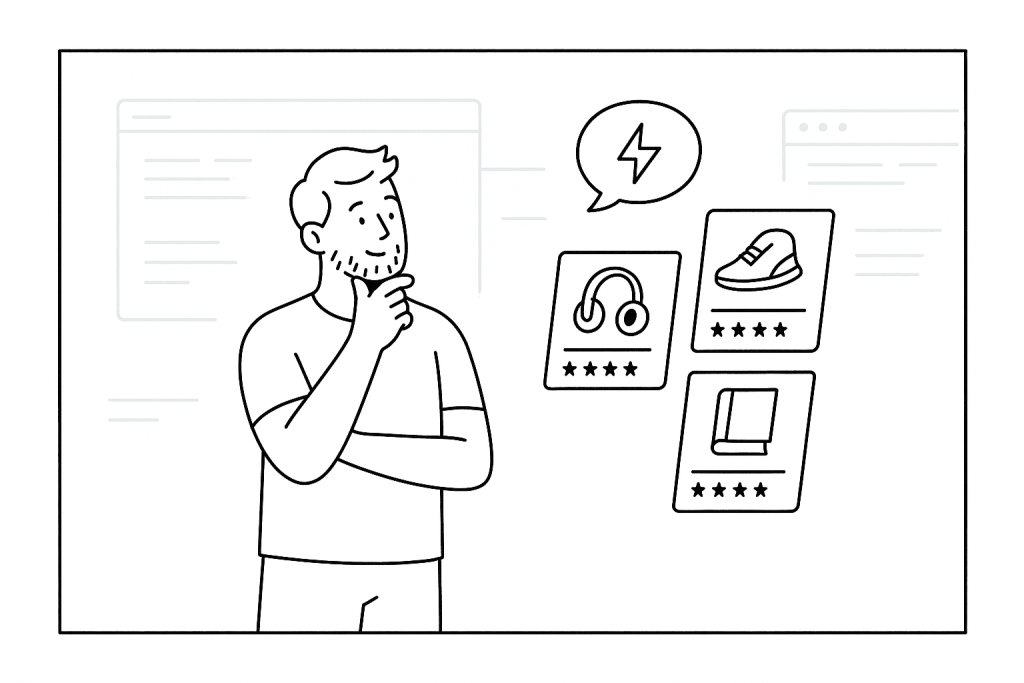
Think about your own habits. Rather than navigating search engine pages, you might now ask ChatGPT something like, “What are the best noise-cancelling headphones under £200?” and instantly get a curated response. This kind of conversational, context-aware search is rapidly changing how consumers find and evaluate products.
Why This Matters
Recent shifts suggest AI-driven tools are dramatically altering product discovery. Early research shows that traditional web traffic could decline because AI tools provide direct answers without requiring users to click through to websites. An alarming statistic from Google’s own AI experiments shows that AI-generated answers now appear for about 84% of searches, often reducing clicks on organic links significantly.
AI chatbots like ChatGPT, Claude, and Microsoft Copilot don’t just deliver answers, they deliver personalised recommendations. A report on ecommerce and AI notes that consumers are increasingly turning to tools like ChatGPT for product discovery and decision-making.
In conversations within the product community, I’m frequently seeing mentions of ChatGPT increasingly moving up the list as a significant source of traffic.
The New SEO: Structured Product Data
SEO isn’t going anywhere, but its role is changing dramatically. Visibility now hinges less on keyword optimization and more on structured, easily parseable product data. AI systems thrive on structured data: product schemas, clearly tagged content, and comprehensive product details. Without structured data, AI can overlook or misrepresent products entirely. As noted in this guide on schema markup, structured content increases the chance of being featured in AI results.
Platforms like Microsoft and Shopify are already integrating structured data to allow direct shopping experiences within AI interfaces. Microsoft’s Copilot Merchant Program enables product catalogs to appear in Copilot’s chats, complete with real-time stock and price info.
Shopify and Amazon’s Moves
Shopify recently partnered with OpenAI to embed shopping directly within ChatGPT, allowing users to browse and buy products in a seamless, conversational flow. It’s a powerful move that positions Shopify well in this evolving space. At Woo, we’re currently exploring how to make these capabilities native to WooCommerce, without requiring merchants to rely on additional plugins.
We’re planning to add rich product schema to WooCommerce core out of the box. Structured data shouldn’t be an optional extra. It’s quickly becoming foundational for visibility in AI-first search environments.
Amazon isn’t far behind, deploying Rufus, an AI shopping assistant integrated into its platform. Rufus answers detailed product queries directly within Amazon, using generative AI to personalise recommendations and even dynamically rewrite product descriptions to highlight the most relevant attributes.
How to Prepare for AI-Driven Search
Here’s what you should focus on to stay competitive:
- Structured Data Implementation
- Validate your schema with Google’s Rich Results Test or schema.dev, and spot‑check visibility in Bing Webmaster Tools or ChatGPT’s browser mode.
- Add extra rich snippets where relevant: FAQ, Review, Breadcrumb, Organization. These help AI assistants answer follow‑up questions and build trust.
- WooCommerce user? We’ll be adding rich product schema out of the box to a future release.
- AI Integration Programs: Join official initiatives like Microsoft’s Copilot Merchant Program to improve your product visibility within AI searches. I’m certain a Google equivalent will soon foolow.
- Quality and Comprehensive Content: Maintain detailed, authoritative product content and descriptions that clearly communicate unique benefits.
- Monitor AI Algorithms: Try running product-related queries in ChatGPT or Microsoft Copilot and see what comes up. Look for your brand, check the sources cited, and keep an eye on what gets recommended. It’s not exact, but you’ll start to see patterns over time.
Embracing the Future
The shift towards AI-driven ecommerce discovery isn’t a distant possibility. It’s happening right now. Businesses that adapt by leveraging structured data, integrating directly with AI platforms, and optimising for conversational interfaces will thrive. Those who lag behind might soon find their products invisible in an increasingly AI-driven market.
It’s time to start thinking differently. The next customer finding your product might not be through a Google search, but through a friendly conversation with their favourite AI assistant.
Leave a Reply